

Cyber Security Services
Trusted by growing Australian businesses
- 150+ companies served
- 20+ industries
- 57 5-star reviews
- 100% Australia-based team


Understand Where You Are Exposed
Effective cyber security starts with understanding what your business depends on, where sensitive information sits and how an incident could affect operations.
Stanfield IT reviews the security of your identities, email, Microsoft 365, supported cloud platforms, endpoints, networks, backups, privileged access, third-party connections, policies and incident-response capability.
Rather than hand over a generic checklist, we connect technical findings to practical business consequences. These may include operational downtime, fraudulent payments, privacy exposure, lost data, customer obligations, financial loss and reputational damage.
Each risk is assessed by likelihood, consequence and urgency. You receive a prioritised roadmap that identifies:
- Immediate risks requiring urgent attention
- Medium-term control improvements
- Recommended owners and timeframes
- Technology, process and policy changes
- Areas requiring further testing
- Risks requiring leadership acceptance or investment
The result is a practical improvement plan rather than a long report that nobody owns.
A Cyber Security Risk Assessment can stand alone or become the starting point for managed cyber security, Essential Eight uplift, ISO 27001 readiness, cyber insurance preparation or a wider technology program.
Strengthen the Controls That Matter
Security improves only when effective controls are implemented in the systems people use every day.
Stanfield IT helps strengthen identity, Microsoft 365, cloud platforms, endpoints, email, networks, administrator access, patching, backups and recovery without creating unnecessary complexity for your staff.
Depending on your environment, work can include:
- Multi-factor authentication and Conditional Access
- Separate and protected administrator accounts
- Least-privilege access and regular access reviews
- Consistent staff onboarding and offboarding
- Microsoft 365, cloud and email security hardening
- Endpoint detection and response
- Managed devices, encryption and configuration standards
- Software and operating-system patching
- Firewall and secure remote-access improvements
- Network segmentation and Wi-Fi security
- Protected backups and tested recovery procedures
- Security awareness and phishing simulations
We first look at whether your existing licences and platforms can be used more effectively before recommending additional products.
Each material change is documented and tested. Controls are designed around the way your people work so that avoidable exposure is reduced without making routine work unnecessarily difficult.


Managed Cyber Security Services
Prevention matters, but no organisation should assume that every cyber threat will be stopped.
Managed cyber security services add ongoing monitoring, alert validation, vulnerability management, escalation, reporting and continuous improvement around your existing security controls.
Your service can include:
- Managed Detection and Response
- Endpoint and identity monitoring
- Centralised security logging
- Alert investigation and triage
- Vulnerability scanning and remediation tracking
- Security configuration reviews
- Incident-response planning
- Security reporting and regular service reviews
- Optional 24/7 monitoring and escalation
Before the service begins, we define what is monitored, who reviews alerts, what response actions are authorised, when your team is contacted and which responsibilities remain with your organisation or another provider.
That distinction matters. Receiving an automated alert is not the same as having a qualified person validate the activity, understand the business impact and coordinate an appropriate response.
When a genuine incident occurs, the priorities are clear: understand what happened, contain the threat, preserve useful evidence, restore safe operations and reduce the likelihood of recurrence.
Stanfield IT can coordinate technical response with your internal IT team, insurers, legal or privacy advisers and specialist forensic providers where required.
Cyber Risk Is Business Risk
ASD’s Australian Cyber Security Centre received more than 84,700 cybercrime reports in 2024–25—approximately one every six minutes. Average self-reported losses were $56,571 for small businesses and $97,166 for medium businesses.
These figures do not predict what an individual incident will cost. They demonstrate why clear security ownership, sensible controls and incident preparedness matter.
This statistic should be reviewed when the next Annual Cyber Threat Report is released.

Our cyber security services

Risk Assessment & Strategy
Understand your current exposure and create a defensible plan for improvement.
Services can include cyber security risk assessments, security consulting, prioritised roadmaps, policy development, supplier reviews and executive reporting.
Recommendations connect technical findings to business impact, customer obligations and risk appetite. This helps leadership decide what must be fixed immediately, what should be planned and where further investment is justified.
Managed Detection & Response
Monitor for suspicious activity, validate security alerts and follow clear escalation and response procedures.
Managed Detection and Response can bring together endpoint, identity, email and cloud signals. Material activity is investigated and prioritised according to likely business impact rather than simply forwarding every automated alert.
Optional 24/7 monitoring can be included where required and agreed. Coverage, response authority, escalation contacts, service levels and exclusions are documented before commencement.

Identity & Cloud Security
Protect the accounts, applications and data most frequently targeted through phishing, password theft and account takeover.
We help strengthen multi-factor authentication, Conditional Access, privileged roles, secure administrator access, onboarding, offboarding, device compliance, email protection, cloud sharing and access reviews.
Services can support Microsoft 365, Azure, Google Workspace and other agreed cloud environments. We can also help introduce safer governance for business AI tools and sensitive information.

Testing & Vulnerability
Find technical weaknesses before they become business incidents.
Stanfield IT provides vulnerability scanning, attack-surface reviews, remediation planning and authorised penetration testing across agreed networks, applications, cloud environments and external infrastructure.
Findings are prioritised by exploitability and likely business impact. We explain what needs to change, support the responsible owners and verify that critical weaknesses have been addressed.

Security Awareness Training
Help employees recognise phishing, social engineering, payment redirection, credential theft and unsafe data handling.
Training should reflect the risks employees encounter in their actual roles. Services can include awareness training, phishing simulations, targeted follow-up, reporting and practical guidance for executives, finance teams and privileged users.
The aim is measurable improvement—not an annual presentation that is quickly forgotten.

Compliance & Resilience
Turn security, compliance and resilience requirements into practical controls, evidence and accountable improvement work.
Stanfield IT can support Essential Eight uplift, an ISO/IEC 27001-aligned Information Security Management System, Notifiable Data Breaches readiness, cyber insurance preparation, incident-response planning, backup assurance and recovery testing.
Where legal, privacy, certification, forensic or independent-audit advice is required, we work alongside the appropriate specialist rather than presenting technical services as legal advice or certification.

Choose the Right Support Model
Cyber security support should match your business risk, internal capability and budget. Stanfield IT offers three practical ways to engage.
Assessment and roadmap
Best for organisations that need independent clarity before committing to a wider program. The engagement establishes the current state, priority risks, recommended owners and a staged remediation plan.
Managed cyber security
Best for businesses that want ongoing operational ownership. Scope can include hardening, monitoring, vulnerability management, reporting, regular reviews and defined incident escalation.
Co-managed cyber security
Best for organisations with internal IT staff or an existing provider that needs additional security expertise. Stanfield IT can add independent assessment, MDR, testing, framework support, specialist projects or incident escalation while the internal team retains agreed day-to-day responsibilities.
For every model, the scope should clearly identify:
- Included systems and services
- Monitoring and support hours
- Responsibilities and exclusions
- Response authority
- Escalation contacts
- Reporting arrangements
- Project and out-of-scope rates
This prevents important security work from falling between your business, internal IT and external providers.
Frameworks and Compliance Support
Security frameworks are valuable when they lead to genuine control improvements. They are less useful when treated as paperwork completed once and then forgotten.
Stanfield IT can help assess and strengthen controls against the ASD Essential Eight, support an ISO/IEC 27001-aligned Information Security Management System, improve Notifiable Data Breaches readiness and respond to customer, insurer, tender or audit requirements.
For the Essential Eight, we can help:
- Establish the systems included in scope
- Assess current implementation
- Select an appropriate target maturity level
- Identify gaps and evidence requirements
- Build a staged uplift roadmap
- Implement and maintain technical controls
- Track exceptions and improvement actions
For ISO/IEC 27001, support can include ISMS scoping, information-security risk assessment, risk treatment, policies, technical controls, evidence preparation, internal readiness and continual improvement.
Stanfield IT does not issue ISO certification or provide legal advice. Certification must be completed by an appropriate independent certification body, while legal and privacy questions should be referred to qualified advisers.
The ASD describes four Essential Eight maturity levels from Maturity Level Zero to Maturity Level Three and recommends choosing a target level through a risk-based approach. ISO/IEC 27001 defines the requirements for establishing, implementing, maintaining and continually improving an ISMS.


Reporting That Shows Progress
Cyber security reporting should help leaders make decisions—not bury them in automated alerts and technical terminology.
Stanfield IT turns security activity into clear reporting on current risk, completed work, unresolved control gaps and the next priorities requiring attention.
Depending on your service, reporting can cover:
- Multi-factor authentication and privileged access
- Endpoint protection and device compliance
- Software patching and unsupported systems
- Vulnerabilities and remediation progress
- Security incidents and alert trends
- Backup and recovery status
- Essential Eight or ISMS actions
- Third-party and supplier risks
- Risks requiring leadership decisions
- Planned security improvements
Technical teams receive enough detail to investigate and complete remediation. Directors and executives receive a concise view of exposure, accountability, progress and decisions.
Regular reviews keep the security program aligned with changes to staff, systems, cloud platforms, suppliers, customer expectations and business operations.
The objective is not to report that tools are running. It is to demonstrate whether material risks are being reduced.
Cyber security matched to your systems, internal capability and business obligations.

Growing Australian Businesses
Build strong cyber security foundations without hiring a complete internal security team.
We focus first on controls that commonly reduce practical business risk: multi-factor authentication, protected administrator accounts, secure email, managed endpoints, patching, protected backups, staff awareness and an incident-response plan.
Services can expand into ongoing monitoring, vulnerability management, compliance and reporting as the organisation grows.

Internal IT Teams
Add specialist cyber security capability without giving up day-to-day control.
Co-managed services can provide independent assessments, Managed Detection and Response, penetration testing, vulnerability management, cloud security, compliance support, executive reporting and specialist incident escalation.
Responsibilities are agreed clearly so internal staff retain ownership where appropriate and Stanfield IT fills identified capability or capacity gaps.

Compliance-Led Teams
Financial services, healthcare, professional services and other trust-led organisations frequently face customer due diligence, insurer, tender, privacy, governance or audit requirements.
We help translate these expectations into technical controls, evidence, risk treatment and a staged improvement plan. Where formal legal, audit or certification advice is required, we coordinate with the relevant independent specialist.

Multi-Site & Hybrid Teams
Businesses with remote staff, cloud applications, contractors or several locations need consistent controls across identities, devices, email and data.
We help apply common security standards while accounting for operational differences between sites and roles. This improves visibility, reduces unmanaged access and gives leadership a clearer picture of security across the organisation.
Why Stanfield IT?
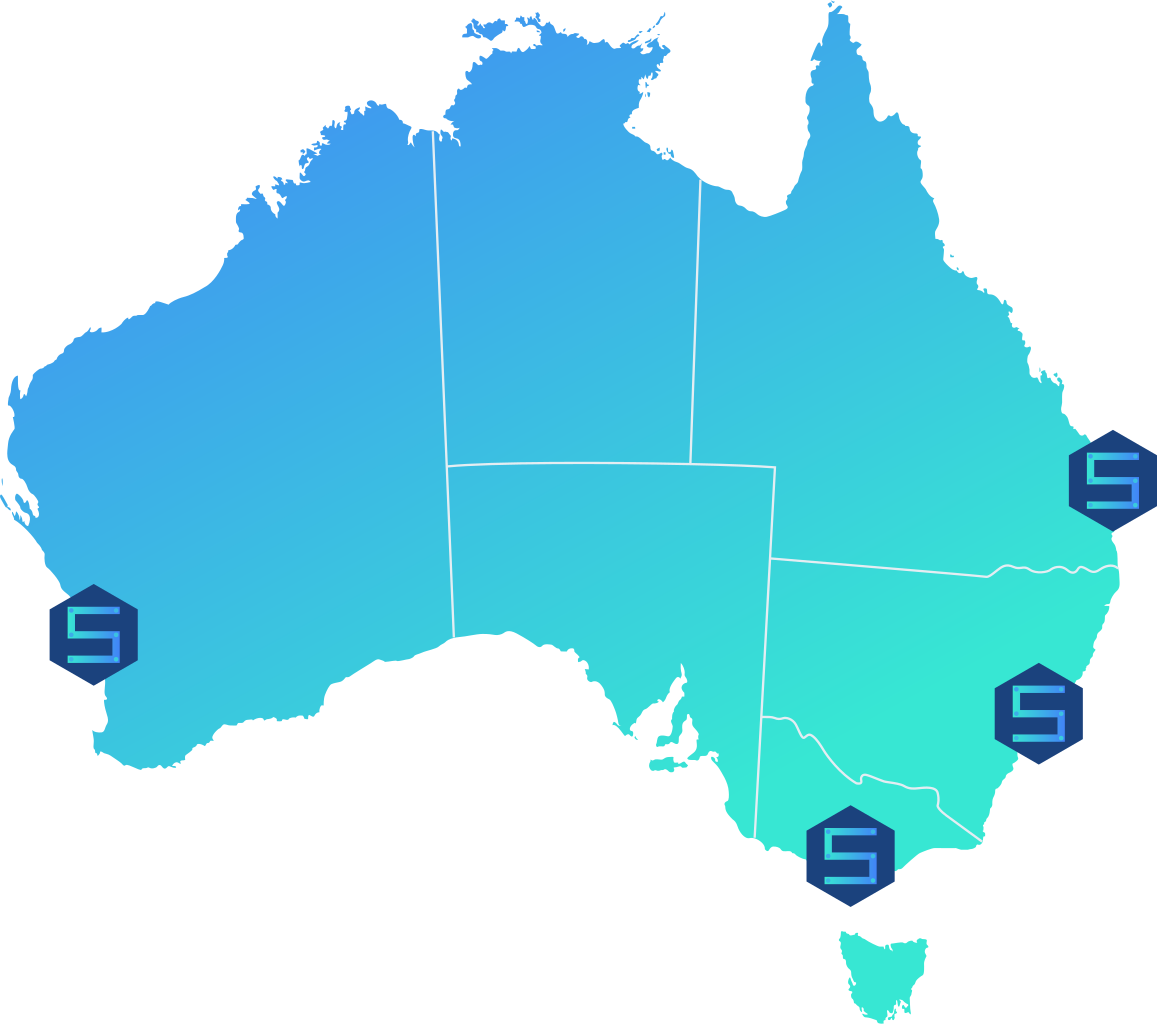
- Sydney office in Frenchs Forest with Australia-wide support
- 100% Australia-based team
- Cyber security, managed IT, cloud, backup and infrastructure capability
- Assessment, implementation and ongoing management
- Fully managed and co-managed options
- Clear scope, ownership, escalation and executive reporting
- Experience across 150+ companies and 20+ industries
Frequently Asked Questions
-
Cyber security services combine risk assessment, technical controls, monitoring, testing, staff awareness, incident response and continual improvement to protect business systems, accounts, data, people and operations.
-
Most businesses need strong identity and email protection, managed devices, patching, secure backups, staff awareness and an incident response plan. A risk assessment identifies whether MDR, penetration testing or compliance support should follow.
-
Scope can include security hardening, MDR, alert triage, vulnerability management, reporting, reviews, incident readiness and continuous improvement. Coverage hours, response actions, exclusions and responsibilities are defined in the proposal.
-
Consulting focuses on assessment, strategy, governance, frameworks and a prioritised roadmap. Managed security provides ongoing operational ownership across monitoring, control maintenance, vulnerability management, reporting and response support.
-
Optional 24/7 monitoring can be included where required and agreed. We document what is monitored, who validates alerts, escalation timeframes, authorised response actions and what remains the responsibility of your team or another provider.
-
Response depends on the agreed authority, tools and incident type. We define what analysts may isolate, disable or block, when approval is required and how your team is contacted, so responsibilities are clear before an incident.
-
Yes. Co-managed services can add risk assessment, MDR, testing, vulnerability management, compliance support or specialist escalation while your internal team or MSP retains agreed day-to-day responsibilities.
-
Yes. We assess against the ASD Essential Eight Maturity Model and support practical uplift. We also help build an ISO/IEC 27001-aligned ISMS and prepare for independent certification; Stanfield IT is not the certification body.
-
Yes. We can improve technical safeguards, response plans, evidence collection and coordination. Whether an incident is legally notifiable should be determined by your organisation with appropriate legal or privacy advice.
-
We review critical systems, identities, devices, cloud services, policies, suppliers, monitoring, backups and response readiness. You receive prioritised findings, business impact, recommended owners and a practical remediation roadmap.
-
Cost depends on users, devices, platforms, risk, coverage hours and required services. We provide a written scope separating included work, optional services and one-off projects. Our 2026 pricing guide includes practical scoping examples.
-
Contact us as soon as suspicious activity is identified. We will confirm availability and scope, then help triage, contain, investigate and recover. Response times and after-hours support depend on your agreement and the incident circumstances.
-
Yes. We support Australian organisations nationally. Most assessment, monitoring, advisory and response work can be delivered remotely, with onsite assistance available where required and agreed.
Read some of our latest case studies



Strengthen Your Security
Start with a clear assessment, practical priorities and one accountable local team.